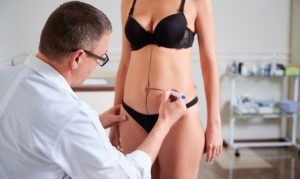
A lower belly pouch that sticks around long after your pregnancy is over or you’ve finished with weight loss can frustrate you, especially if you train consistently and eat well. A mini tummy tuck is one way to address an area that won’t budge in response to diet and exercise, and a local Wellington, FL plastic surgeon can help you decide if it’s right for you.
The Problem
Pregnancy stretches the abdominal wall and skin, and sometimes they just don’t bounce back. Meanwhile, significant weight loss can leave you with skin tissue that simply does not tighten on its own. On top of that, we all gradually lose skin elasticity with age, which prevents our skin from recovering like it once did. What you end up with is a soft projection or a loose fold below the navel that resists every effort you make in the gym or kitchen.
Who Is a Good Candidate for a Mini Tummy Tuck in Wellington, FL?
A good candidate:
-
Has had a stable weight for several months that’s close to the range they want
-
Has solid overall health with no uncontrolled conditions that could complicate healing
-
Doesn’t smoke or can stop nicotine completely until fully healed
-
Has finished having children
Age alone does not rule anyone out for this procedure, but skin quality and healing capacity do matter. Younger patients with good skin elasticity will typically see especially clean results, but adults of many ages can benefit: it just may take a little more time to heal. And although the typical tummy tuck patient is a woman, men are and can be candidates if they have the same concerns.
Talking With a Surgeon
When you come in for a consultation, we examine how much excess skin sits below the navel, how the skin above it behaves, and whether any mild muscle separation you might be experiencing is limited to the lower wall of the abdomen. If the looseness or separation reaches higher than that, then a mini tuck might not work well for you, and a full tummy tuck would give better results.
The lower abdominal wall contains skin, fat, and the lower portion of the rectus muscles and fascia. When only those structures have an issue, then limited surgical work like a mini-tuck can restore smoother lines for you without the longer recovery that comes with a full abdominal repair. Your surgeon’s goal will be to help you choose the right technique so you don’t under-treat or over-treat the area and get exactly the results that fit your natural proportions.
At this same consultation, we’ll go over your medical history, any medications or supplements you’re taking, your goals and concerns, and more. The goal is to make sure you get the procedure that’s exactly right for you. During the consultation, expect to take some photographs and measurements, which can be used to compare your progress later. Your surgeon will also perform a physical exam to map out exactly how much tissue to remove and decide whether liposuction or limited muscle work will improve the result for you.
The Mini-Tuck Procedure
The incisions go low on the abdomen, inside the bikini line, so that clothing or swimwear can cover it. Through that short opening, your surgeon will lift the skin, remove the excess tissue, and can then tighten the lower fascia if there’s a bit of mild bulging remaining. Liposuction often gets added on and allows your doctor to refine the lower abdomen and flanks at the same time. Most patients go home the same day.
The standard approach is to get general anesthesia, and before the day of surgery we’ll give you clear instructions about medications to pause and the need for someone to help at home during the first day or two. Right afterward, you’ll wear a compression garment to support the area afterward and help limit swelling.
Recovery
Week 1
During the first week you will feel the most discomfort, tightness, bruising, and swelling, though you should talk through getting proper prescription pain medication that will keep it all very manageable. You should begin gentle walking right away to keep your circulation moving, and you should rest with your upper body slightly elevated.
Week 2
By the second week, many patients can return to desk work once they are off strong pain medicine and can move comfortably. You’ll continue with the short, gentle walks, and at this point the swelling should be easing. You’ll still keep the compression garment on, however. If you notice unexpected redness, rising pain, fever, or fluid drainage, contact your doctor right away so it can be addressed early, before a small issue has a chance to become serious.
Weeks 3 & 4
In weeks three and four your energy usually returns and the swelling continues to drop, so you can start focusing on scar care once the incision is pronounced thoroughly healed. Light household activity becomes possible again, but you’ll still need to avoid any abdominal workouts, impact exercise, and lifting children or heavy bags until the doctor clears you.
Weeks 5 & 6
Around weeks five and six, you’re usually ready for low-impact exercise. You may still notice some residual firmness and mild swelling for a while longer, and your final contours will settle in between three and six months as the tissues fully adapt. By six weeks, you can usually begin working up through progressive exercise to what you were doing before your surgery. Continued strength training, once approved, will help you to maintain your muscle tone under your smoother and tighter skin.
The scar will be very low and smaller than the scar from a full tummy tuck. It’s hidden by most clothing, and it should soften and fade over the first year if you keep it protected from the sun. Once the incision has fully healed, you can start using silicone gel or sheets, which helps the scar mature more smoothly.
Long-term, your satisfaction will track closely with the lifestyle you maintain. Patients who keep their weight stable can expect lasting improvement, but if you have large weight fluctuations, that can bring some fullness back. Follow-up visits give us the chance to discuss any changes and consider small refinements if they become useful.
Preparing for a Tuck
Your preparation for surgery should begin weeks ahead of time. That’s when you’ll stop nicotine (if you use it), pause taking any blood thinners as we direct, and build extra protein into your meals while staying well hydrated. Protein gives your body what it needs to repair damaged tissues. Arrange time off work and childcare, stock up on some easy foods and loose clothing, and set up a recovery spot with any needed supplies within easy reach. Taking care of all this beforehand will reduce your stress once the surgery is behind you.
Limited abdominoplasty is a great option when you have sagging and pooching below your navel after pregnancy or weight change. If you’re interested in whether a mini-tuck is right for you, the first step is to schedule a consultation with Dr. Nir here at Palms Wellington Plastic Surgery.

Medically Reviewed By
Dr. Itzhak Nir, MD FACS
Board-Certified Cosmetic & Reconstructive Plastic Surgeon. Dr. Nir has been serving the Wellington and South Florida community since 2001, specializing in aesthetic surgery of the face, body, and breasts. Learn more about Dr. Nir →