If hooded lids or a heavy brow are making you look tired, eyelid and brow lift surgery can restore an open, rested appearance and help you feel more like yourself again. Patients considering eyelid surgery in Wellington, FL often want to understand what the operation involves before they schedule a visit, and it’s important to have the right expectations going in.
Understanding Eyelid and Brow Lift Surgery
Eyelid surgery, which is technically called blepharoplasty, removes or repositions extra skin, muscle, and fat around the eyelids so the eyes look more open and less puffy. The work can be limited to the upper lids, the lower lids, or can include both, depending on what the tissue is doing and what you want changed.
A brow lift, sometimes called a forehead lift, raises brows that have dropped and softens the lines that form across the forehead and between the brows. When the brow sits too low, it can push extra skin onto the upper lid and make a lid-only operation look incomplete. The two operations are often planned together for this reason, because removing lid skin while the brow still hangs down can leave you with a heavy upper third, while lifting the brow without touching redundant lid skin can leave a fold that still rests on the lashes.
Your surgeon can help you think through the options and decide what’s best based on your brow, crease, and lid margin.
How and Why the Upper Lids Change
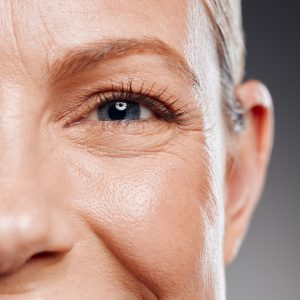
The skin around the eyes is quite thin, so with years of blinking, sun, and gravity, it eventually stretches. The muscle that supports the lid also tends to weaken with age, and fat that once sat neatly in the orbit can start to push forward. The result is a fold of skin that sits on the lashes, a crease that looks lower than it used to, and a tired look that makeup cannot hide.
In some people, this extra skin is more than a cosmetic problem and can actually cut into the upper and outer parts of the visual field. When that happens, visual field testing can document the blockage, and, at that point, insurance may cover a functional upper lid procedure. For purely cosmetic operations, it’s normal to pay out of pocket.
Surgery on the Upper Lid
The usual upper-lid incision follows the natural crease of the lid, and through that line, the surgeon trims a measured strip of skin. If needed, the surgeon will also take a sliver of muscle or a pocket of fat. The amount left behind is as important as the amount taken: too little skin left between the brow and the lashes can make the lid look short or keep the eye from closing fully.
Once the crease incision heals, it’s hidden in the fold that forms when the eye is open. Upper-lid scars are usually very hard to see after the first months, provided you protect the area from the sun during the healing period.
Lower Lids and the Lid-Cheek Junction
Lower lids age differently. Fat pads can bulge, the lid-cheek junction can hollow out, and the very fine skin in this area can wrinkle. Dark pigment and very thin skin are not fixed by surgery alone, though smoothing an under-eye bag can reduce the shadows that make you look older and more tired.
Surgery on the Lower Lid
In some cases, a transconjunctival cut inside the lid can reach the fat without any need for an external scar. This is a good option if you have under-eye bags but good skin condition overall. A cut just below the lash line lets the surgeon tighten the skin as well as work on fat. Modern practice favors conservative fat removal and, when the anatomy allows it, repositioning of the fat over the rim so the lid blends into the cheek instead of looking scooped out.
Including a Brow Lift
A dropped brow can crowd your upper lid, and if your surgeon lifts only the lid while the brow still sags, the crease can look odd and the hooding can return as the brow continues to weigh on the skin. A brow lift raises the brow, reduces horizontal forehead lines, and softens the vertical frown lines between the brows.
Endoscopic lifts are done using a small incision behind the hairline and a camera, while a temporal or lateral lift focuses on the outer brow. The choice depends on hairline height, brow shape, and how much lift you need.
Good Candidates
Healthy adults with extra eyelid skin, bags, or a low brow and with goals that match what these surgeries can do are the best candidates. Most people who have the operation are over forty, though younger adults sometimes get it done if their genetics predispose them to get under-eye bags and sagging earlier in life.
During your consultation, you’ll be asked about any issues with dry eye, glaucoma, thyroid disease, diabetes, high blood pressure, or bleeding problems you’ve had. Your surgeon will also ask about smoking and every medicine and supplement you take.
We’ll also talk to you about what the operation can do to make you look more rested. It will not, however, totally redesign the bone of the orbit or erase every line at the outer corner. Crow’s feet from muscle movement often still need to be treated with a neuromodulator, which we can also discuss if you want to be rid of them.
Planning Eyelid Surgery in Wellington, FL
You’ll start with a consultation and talk through what procedure your surgeon will use precisely and whether other work, such as a facelift or skin resurfacing, can be done during the same session. Before the surgery date, you’ll typically be asked to stop taking aspirin, ibuprofen, naproxen, and certain supplements that thin the blood. If you’re a smoker, you’ll need to stop smoking a few weeks before surgery and not resume until you are fully healed. Most eyelid operations are done as outpatient procedures. A numbing injection is put into your lids, plus intravenous medicine to keep you comfortable. If you’re having more extensive work done at the same time, you might be under general anesthesia.
After the incisions are closed, you’ll move to a recovery area and go home the same day once you are stable. Temporary blurriness from the ointment, watering, light sensitivity, puffiness, and a little bruising are all expected for the first few hours. You’ll want to use ice packs or cool packs for short stretches the first night, then several times the next day, to help with swelling.
For about a week, you won’t be able to lift heavy objects, swim, jog, or do aerobics. Contacts need to stay out for about two weeks, and you’ll wait to apply makeup again until the incisions have sealed and the external sutures are out, which is usually around ten to fourteen days in.
If you want a plan that’s built around your lids and brow, schedule a consultation with Dr. Nir today at Palms Wellington Plastic Surgery. Dr. Itzhak Nir, MD FACS is a board-certified cosmetic and reconstructive plastic surgeon specializing in aesthetic surgery of the face, body, and breasts. Visit us online today or call at 561-753-3331 to get started.
Medically Reviewed By
Dr. Itzhak Nir, MD FACS
Board-Certified Cosmetic & Reconstructive Plastic Surgeon. Dr. Nir has been serving the Wellington and South Florida community since 2001, specializing in aesthetic surgery of the face, body, and breasts. Learn more about Dr. Nir →